
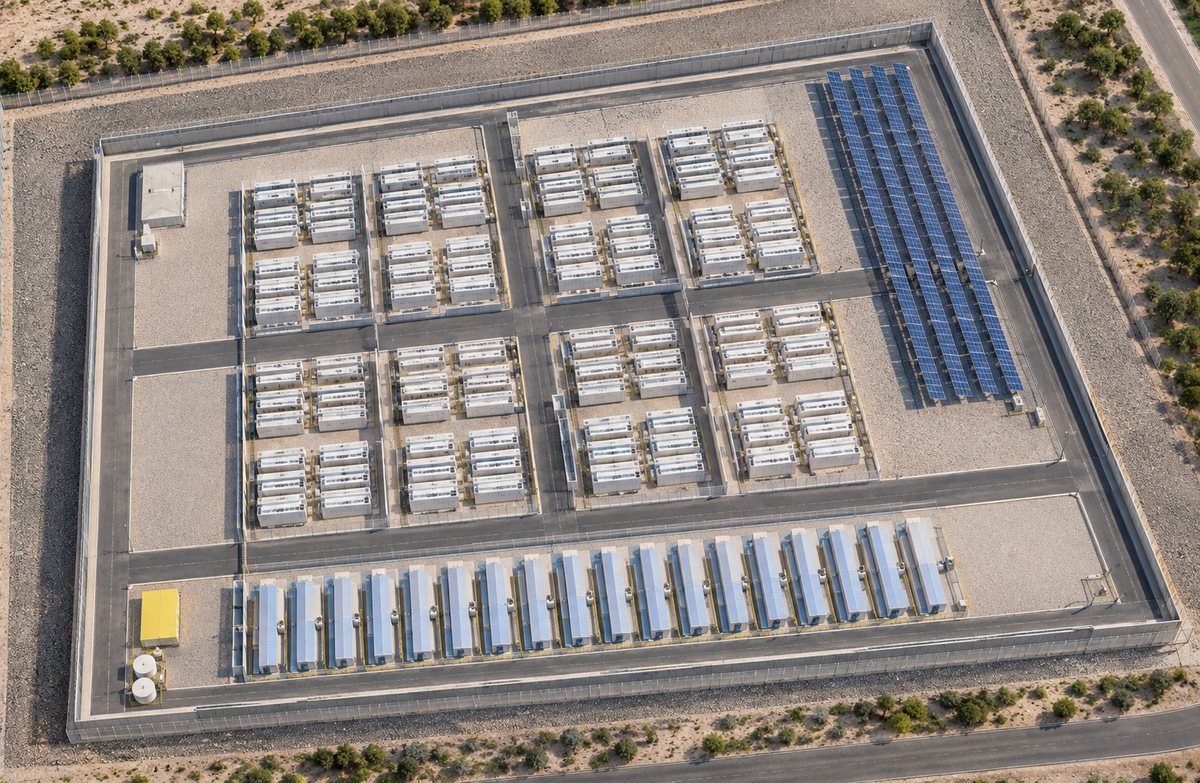
What NVIDIA announced
The DSX POD is a reference design that NVIDIA’s manufacturing partners will build, including Foxconn, Gigabyte, Lenovo, HPE, Quanta and Pegatron. All cabling and liquid cooling are assembled and tested in the factory. “The only thing that has to happen when it gets to the site is it’s placed in its location, connected to the rest of the other containers, and validated,” said Ian Buck, NVIDIA’s vice president of hyperscale computing.
The stakes are high. Analysts say a single Vera Rubin rack can cost more than $7 million, and NVIDIA’s chief executive Jensen Huang has said the value NVIDIA supplies per gigawatt has grown from about $18 billion to more than $40 billion. A pod that arrives before its power is ready is expensive equipment waiting.
The missing piece: 800 V DC power at the pod
- The pod takes 800 V DC; today’s racks inside it take AC. NVIDIA’s technical description of the DSX POD specifies standard 800 VDC input power to the container. The Vera Rubin NVL72 racks in today’s pods use power shelves fed with 346–480 V AC, so the DC is converted for them inside the container.
- Generation is left to partners. NVIDIA says partners engineer the upstream generation, conversion and regional electrical solution for each site.
- 800 V DC is NVIDIA’s direction. NVIDIA has said full-scale production of 800 V DC data centers will begin in 2027, with grid power converted from 13.8 kV AC to 800 V DC at the data-center perimeter, scaling to racks of 1 MW and beyond.
Where CROSSOVER fits
- 800 V DC at the generator. CROSSOVER is designed to deliver 800 V DC directly from the generator, on multiple isolated buses, so the pods need no medium- and low-voltage transformers, switchgear or separate rectifiers between the gas turbine and the racks.
- Pod-sized feeds. Each 16 MW CROSSOVER unit is designed to feed four isolated 800 V DC buses of about 4 MW, each serving its own group of racks with battery storage and supercapacitors.
- Built and shipped like the pods. CROSSOVER is factory-built on skids from existing aero engines and set up from three 40 ft modules, with a 72-hour install as the engineering target, so power and compute can arrive on the same timetable.
- Native 800 V DC racks, 2028–2030. When NVIDIA moves to racks fed directly at 800 V DC, from Rubin Ultra / Kyber (about 600 kW per rack, expected from 2027–28) to later Feynman systems, CROSSOVER’s isolated 800 V DC buses are designed to match them directly, with no conversion in between.
- Behind the meter, for the next rack generations. Natural-gas generation on site avoids waiting for grid connections, new turbines and transformers. CROSSOVER targets its first unit and pilot in Q2 2028 and volume production in 2029, in time for those rack generations.
Read with care: Hyper Tech is not affiliated with NVIDIA, and NVIDIA has not evaluated or endorsed CROSSOVER. NVIDIA has not published the power rating of a DSX POD. Pod details are as reported by CNBC, NVIDIA and The New Stack; rack power figures are industry estimates, not NVIDIA ratings. CROSSOVER is a development program; ratings, install times and dates are design targets.
Planning DSX POD deployments?
Data-center developers and investors can see the technical package, site economics and financial model under a mutual NDA.
Request the NDASources
- CNBC: “Nvidia announces plug and play Vera Rubin racks that can be shipped on a truck”, October 21, 2026.
- NVIDIA Technical Blog: “Achieve Productive AI Capacity Faster and More Predictably with NVIDIA DSX POD”, October 2026.
- The New Stack: “Nvidia wants AI factories built in real factories”, October 2026.
- NVIDIA Technical Blog: “NVIDIA 800 VDC Architecture Will Power the Next Generation of AI Factories”, May 20, 2025.
- Flex: power shelf for NVIDIA Vera Rubin NVL72, datasheet (AC input).
- TrendForce: Rubin Ultra rack power outlook, June 25, 2026.
- Hyper Tech: CROSSOVER, power for AI data centers and CROSSOVER: 72 hours to power.
Earlier posts: Google’s Detroit-area data center and Midwest power · 16 MW blocks at 800 V DC: what NVIDIA showed at OCP